
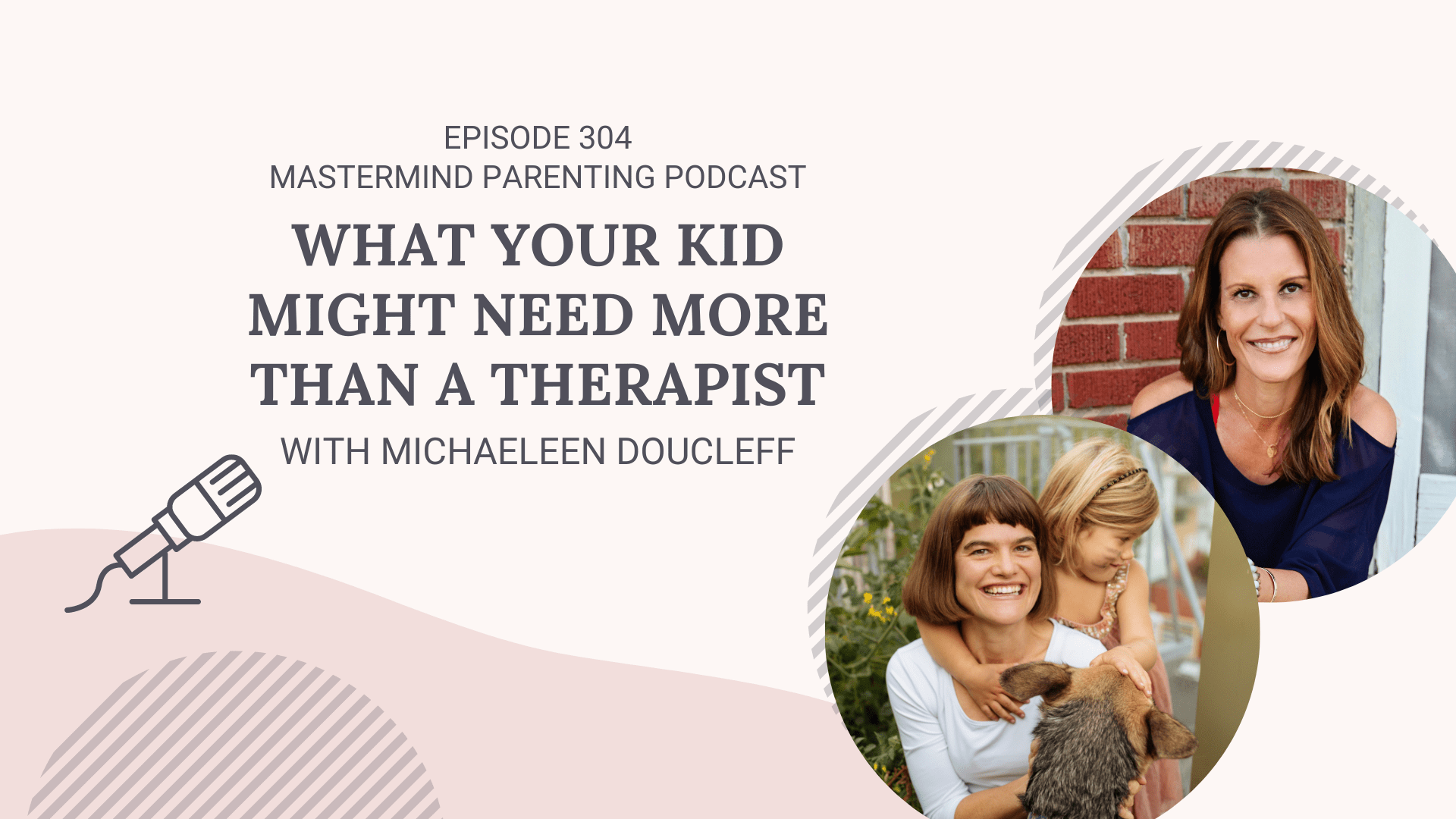
I’m a fan of good therapy. But I also see so many moms, who are trying to help their strong-willed ones, in the wrong order imo…they look for a therapist first, before changing anything at home.
Well this is what I’m talking about today with our fave author, Michaeleen Doucleff.
In part one of this conversation, we discuss why pack leadership seems so natural for some folks, and so elusive for others. We also get into the topic of purpose, attention seeking, attachment styles and even disagree on a few things!
As always, thanks for listening. Head over to Facebook, where you can join my free group Mastermind Parenting Community. We post tips and tools and do pop-up Live conversations where I do extra teaching and coaching to support you in helping your strong-willed children so that they can FEEL better and DO better. If you enjoyed this episode and think that others could benefit from listening, please share it!
About Randi Rubenstein
Randi Rubenstein coaches parents raising strong willed kids. Randi searched endlessly to find the magical resource that would help her own highly sensitive, strong-willed child. (He’s now 26, healthy and happy-ish:). She’s been passionate about helping other “cycle-breaker” parents like herself for almost two decades.
Randi’s Web and Social Links
About Michaleen Doucleff
Michaleen Doucleff is an award-winning global health correspondent and the author of Hunt, Gather, Parent: What Ancient Cultures Can Teach Us About the Lost Art of Raising Happy, Helpful Little Humans. https://michaeleendoucleff.com/hunt-gather-parent/
Links & Resources
- Our 12-week Basics Bootcamp program is now available as a 100% online self-study course! https://mastermindparenting.com/minimasters/
- Live assessment: https://mastermindparenting.com/live-assessment/
- Join our Free Facebook Group
Thanks so much for listening to the Mastermind Parenting podcast, where we support the strong willed child and the families that love them!
If you enjoyed this episode and think that others could benefit from listening, please share it using the share button in the podcast player above.
Don’t forget to subscribe on iTunes, Google Podcasts, Spotify, or Stitcher.


Transcription
[00:00:00] Randi Rubenstein: My name is Randi Rubenstein, and welcome to the Mastermind Parenting Podcast. At Mastermind Parenting, we’re on a mission to support strong-willed kids and the families that love them.
Well, hello, hello. I have an exciting two parter for you guys. So today you’re going to hear part one and then next week we will release part two of my conversation, my most recent catch up with my friend, Michaeleen Doucleff and the author of Hunt, Gather, Parent. I know many of you know who she is, but just in case there’s someone who’s listening for the very first time to this episode, this is going to be a good conversation.
Michaeleen and I, we connected a couple of years ago after I read her book, Hunt, Gather, Parent. And you know, I love Michaeleen because she sort of accidentally found herself in this parenting space. Not personally, she didn’t accidentally find herself in the parenting space in her personal life. She purposely became a parent.
But the parenting professional space, she, she didn’t really, this was not her plan. She was an NPR journal, she is a journalist and she found a story. Like she was, she was studying these indigenous cultures, and it was a different story. And she started to notice something about the way they were parenting their kids that felt very different than what she was experiencing in the urban city in America where she lived at the time.
And, um, with, you know, just her and all her friends, many of which who were becoming parents at, um, an older age than people become parents typically in indigenous populations, and she just noticed that the kids didn’t seem so freaking challenging. And, people just weren’t as stressed out as what she was seeing in San Francisco, in her own home and everyone she knew.
And so she ended up she was gonna write a story it turned out that there was this was a book and she lived with these different populations and, and basically it became sort of her parenting apprenticeship. Um, where she studied the way people who in our modern times are still way more in touch with who we were as humans during hunter and gatherer times, which is the way humans lived for hundreds of thousands of years.
So I read her book. I hadn’t read a parenting book in a long time. I have a complicated relationship with parenting books. I think a lot of times, look, I learned a lot from parenting books over the years, especially when my kids were younger, um, cause I just didn’t know what I didn’t know. So I sort of educated myself on different ways of communicating with kids. And, I did learn things.
And I also think that you can find yourself reading these books, especially ones that are really heavy in the scripts, this is what you say, this is how you say it. And while some of that can be helpful to a point, I think that the parenting space is really sort of conducive for what I call performative parenting, which is this like striving to be the perfect parent or the right kind of parent or the gentle and a gentlest enough parent.
And I think that quite often we can find ourselves there. And then we have these very human moments where people are tired. We’re tired. Our kids are tired. People are out of spoons, right? Like they’re done for the day. We have a kid that’s a highly sensitive person. It’s still the beginning of the school year. Um, transitions are hard for them and they come home and they’re just, you know, they’re just sour. They have a sour mood, they have a, um, they seem angry.
And I think, you know, we can be filling our brains with all the right ways, all these aspirational ways of being a parent. And then you find yourself in real life and, um, and all of that learning goes out the window. And, um, and then you’re in a shame spiral because you’re like, I know what to do and I’m not doing it.
So I have a complicated relationship. While, um, many books have helped me over the years, um, as I was sort of tapping back into what Michaeleen has, what she has said when, you know, in the reason that, that we often, uh, collaborate and, um, and why I think we’ve really developed this nice friendship and this relationship is on my sort of remembering my, like intuitive remembering about all this ancient wisdom that lives within all of us. Right. It lives within our lizard brains, right? Like the deepest part of us as humans, we all have it. And so while we’re tapping back into that intuitive, intuitive wisdom, the way human beings raised smaller human beings and helped them, taught them, supported them in learning how to be alive, essentially, we are tapping back into that ancient wisdom and the way that humans raise kids for hundreds of thousands of years.
Um, and in many ways in our modern society over the last couple of hundred years, we’ve sort of thrown the baby out with the bath water in lots of ways. And so why I love Michaeleen so much and why I love her book so much is that it really sort of validated and put into words what I think I was remembering, but couldn’t really, I, I didn’t really identify yet. She helped me to identify it.
So we had a little catch up as we do. Um, we decided to record it. Really, I decided to record it. And, we go back and forth on lots of different things and, and we have conversations that make both of us think deep, more deeply and tap more deeply into that intuitive wisdom, I believe. And sort of merge the, the concepts around raising kids, that intuitive wisdom from, you know, hundreds of thousands of years, and also where we are now in the modern world. Right. And quite often you know, we, we use different terms and so sometimes we can kind of be at odds, but then we ultimately really realize that we’re talking about the same thing.
And, um, and in these, in this conversation, part one, today, what, the concept that she started talking about that really got me thinking is, um, started talking about purpose. But just even that term, it’s like if somebody asks you or somebody asked me like, what is your purpose? What is your purpose with Mastermind Parenting? What is your purpose in, um, raising your kids. What is your purpose? You know, like, what do you want to leave this earth feeling like, Oh, that was my purpose.
Like, it just sounds a little lofty to me, even just the word purpose. So I kind of have a problem with the word purpose, but I liked the way she broke it down. We kind of were butting heads a little bit. Because I often say kids, they just want your attention. You’re Taylor Swift and they’re at your concert and they’re going to do whatever they can to get Taylor Swift’s attention. And Michaeleen said, I disagree. I don’t think kids constantly want our attention. I think they’re lacking purpose. I think they want purpose.
And, we were kind of at odds about it, but ultimately at some point during this conversation, we kind of came back around because I think we were saying the same thing. You know, to me, when a kid seems like they’re just like a black hole of needs, like they just want more and more and more attention from us, but I just played with you, but it just spent the morning taking you to the park and a birthday party and doing all these child centric things. And now you want even more, they just, they’re like a pit of wants and needs and it’s never enough for them. And, and so we can kind of think of it as they just want our attention, want our attention.
But really what I’m saying is they, they really crave our connection. Like even if we’re doing all the things, crossing all the boxes off, taking them to all the activities. Um, if they sense that we’re just sort of checking things off a list, but we’re not really there with them, we’re not actually enjoying them.
Because maybe our life has become too child centric and we’re a little resentful about it. And we don’t want to really be there doing all the things, but we’re just doing all the things because we’re should-ing all over ourselves, because all the books say, this is what we should do. But the, the scales are, have been tipped more towards everything is around about my kid and I have needs too. And so now I’m kind of resentful. So I might be going through the motions and doing all the things, but I’m not enjoying myself. I’m not enjoying my kid. I’m not actually here with my kid.
And then that kid feels not enjoyed. And then they act more needy, more attention seeking, less enjoyable. And it just becomes this vicious cycle, right? So when I say that kids just want our attention, it’s really that they want our connection. And when they don’t feel that, that, that secure attachment and connection from us, they are a bottomless pit of wants. And so they just become badgery and badgery and badgery, badgery for more and more and more attention.
What I know is that when we show up, in pack leadership and we start to, to live our life based on, we’ve turned hunt, gather, parent into a verb in my community, right? When we hunt, gather, parent our lives, which is really, it’s not parent centric and it’s not kid centric. It’s just family centric. And we’re a family, we’re a pack and we all have needs. And, and, and there’s compromises that are made and we work together and we all get to feel like a valuable member of the pack, right? And, we all have purpose.
And helping our kids to feel like valuable members of the pack, what it might look like, you know, to give a three and a half year old purpose. It might be that she gets to be responsible for putting the doggy vitamins every day into the doggy bowl when they’re eating their breakfast right before they eat their breakfast. And that can feel super purposeful for a three and a half year old, right? We include them and they feel more connected to us. And they feel like we’ve, we’ve given them purpose. Who would this pack be without me helping to care for our family pets and making sure they have their vitamins every day? Like that’s a big deal for a three and a half year old.
So we talk about concepts like that. She really challenges me and helps me to think more deeply. I venture to say that I do the same for her. Um, and we really enjoy these catch ups. And so I just decided to record it and let you guys be a fly on the wall of that. So part one is going to be about some of those concepts that I just talked about and then part two, which will drop next week.
You may have noticed that we’re not dropping episodes every single week, but we are going to drop episode, the second part of this conversation, uh, next week. And that’s where we dig into technology. We talk a little bit about the book that Michaeleen is currently writing. She’s sort of in the final stages of writing this book all about tech addiction and dopamine. Um, And we circle back to some of the things that we’ll talk about in this episode and it’s just a lively conversation as it always is with the two of us. So enjoy.
So you’ve gotten me into this pack leader thing. Right. And like, and what I’ve come to realize is like, I think I assumed it when I wrote Hunt, Gather, Parent. Because it kind of comes naturally to me. And I think it comes naturally to me because I grew up in a low class, lower class home because I’m telling you, Randi, certain classes of in America do not have problems with it. It is a class issue.
Mm.
[00:14:04] Michaeleen Doucleff: And, and so, and, and this is what I’ve come to realize, like, that, um, that’s because I was like, why don’t I have a problem with it? Right? Like, like, right? Like, and, and so, but I think I wrote Hunt, Gather, Parent just, I was telling my agent, I was like, I think I wrote Hunt, Gather, Parent because, like, assuming that, okay, you, you figure these things out and you execute them. And with your pack mentality, but I didn’t, I just assumed it was there.
And what I’m starting to realize is that like, it’s, it’s the power dynamic has been flipped over. And, um, it’s come up like six times in like the last two months. And then I was talking to my book agent about it because it’s a big part of this next book I’m writing, right? Because if you, if you have a power dynamic that’s flipped over where the child is in charge and you give a child the screen. Well, now who’s actually in charge?
[00:15:00] Randi Rubenstein: Mm-Hmm.
[00:15:01] Michaeleen Doucleff: Right? Who is? If you give a child a phone or a screen, is the child in charge? No, it’s the device. It’s the tech company. Yeah, exactly. So this is why, like, right? Like, it’s like a kind of a perfect storm of, like, the parent is no longer in charge. And so it’s a perfect vacuum power, power vacuum that’s been set up. And then you bring in like social media and video games and well,
[00:15:26] Randi Rubenstein: mm-Hmm.
[00:15:27] Michaeleen Doucleff: And, um, did you read Bad Therapy?
[00:15:29] Randi Rubenstein: I think I’ve just seen clips of her promoting the book. And so she’s been on a lot of podcasts and things. So I’ve seen a couple of clips with her.
[00:15:38] Michaeleen Doucleff: she’s real controversial because she wrote that book about like, um, like the transgender girls and, and she’s, um, well, the book, the whole book is, the book, a big part of the book is about this. And, um, I finally read it because somebody said, Oh, she, like, cites to Hunt, Gather, Parent. Like, she has a whole two pages on it, which I was like, yeah, I know.
And I was like, what? Like, you know, and like, and it’s really fascinating because she notices that in Hunt, Gather, Parent, like, I’m kind of saying like, okay, this other way, I am saying this other way isn’t working. Right.
[00:16:17] Randi Rubenstein: So she’s using Hunt, Gather, Parent to support her argument that we’ve, we’re doing it wrong and we’re, the power dynamic is often more over coddling our kids and, and basically like making mountains out of molehills by over. They’re, they’re, whatever the word
[00:16:37] Michaeleen Doucleff: Yeah, she’s kind of acute. She’s kind of accusing the, or placing a lot of the blame on, like, the therapy industry and, like, the mental health industry. Um, but yeah, she, the thesis of the book, it’s pretty interesting book is like. Um, I just skimmed it today, but it was like, it’s like, all of a sudden, all these things are wrong with our children.
Right? Like, they all need therapy. They all need ADHD medication. Like. They’re all depressed. They’re all anxious. And like, and maybe some of it is because they don’t have parents in the sense that they’re the parent, right? Like that kind of what you’re saying, like what you’ve told me so, so often, like, you know, that children need children.
Okay. This is how I’m thinking about it. Like children don’t have the power to have the power.
[00:17:32] Randi Rubenstein: Hmm.
[00:17:33] Michaeleen Doucleff: right? They don’t have the capability. Right. They don’t, they’re not capable of, of being in charge. They’re not capable of like, Taking care of themselves. And so if the parent is a lot,
[00:17:45] Randi Rubenstein: They’re called minors for a reason.
[00:17:47] Michaeleen Doucleff: Yeah, they just don’t have it. Right. Like, and they’re human, they’re not goats and horses that, that are born and can take care of them or snakes. Right. Like, like human children cannot take care of themselves until about 12 really. And, um, and so it feels very like anxiety provoking to them because nobody’s really taking care of them.
[00:18:08] Randi Rubenstein: Right. It’s like, oh, my kid has a behavior issue or I’m worried about them about something. Um, who has a good recommendation for a therapist? I mean, I see it all over. The mom circuits, you know, and, and whatever mom’s groups. And it’s like, everybody’s always looking for that third party resource, which I am a fan of.
I mean, I take mental health very seriously and I’m a fan of therapy, good therapy, and I’m a fan of having the right support team and care team. When we’ve got a kid that’s struggling or a human that’s struggling, but I just think so many people are doing things out of order where they’re just looking for this third party and, and, and no one’s thinking, huh, why don’t I see what kind of change I can affect at home first?
And like nobody, so many people, it doesn’t even occur to them to ever take a parenting program or to start listening to parenting podcasts, reading parenting books and, and figuring out what am I really evaluating? What am I doing at home? You know, like maybe I can affect some change at home first, and then I’ll look for, if I feel like we still need a third party resource, then we’ll find that third party resource. I think it’s just that so many people go to that third party resource first.
[00:19:32] Michaeleen Doucleff: I think she’s also arguing that like, Yes, I think that’s right. And that, you know, that, what’s happening at the therapy is actually kind of probably making things worse. Which, I mean, clearly therapy is, um, is only good as the therapist. So, like, it’s like a massive spectrum, but just this concept of, like.
using, I mean, and what I’ve seen in like other places in which I, I, I think I really agree with, like using cognitive behavioral therapy on small children is not quite like, you know, like it barely works on adults and like a lot of adults. And like, so it’s kind of like, you’re kind of, you’re missing the easy fixes. Which
[00:20:15] Randi Rubenstein: You know what I think is so,
[00:20:16] Michaeleen Doucleff: Just being the pack leader.
[00:20:19] Randi Rubenstein: Well, right, but I, you know, I think what’s interesting though is, um, you know, I told you I’ve been going down that whole rabbit hole, um, around attachment. And, um, learning about attachment and, you know, super out of order that I’m learning about attachment now, but like, I got really curious, whatever.
I just had this woman who just wrote a book, her name is Eli Harwood. And um, and I just read, so I just had her on the podcast and, um, and, She, she doesn’t talk about this metaphor in her book, but I had in researching the pot, researching her for the podcast, I had done some, I had heard her in an interview describe the four main attachment styles, um, in an animal metaphor. And I thought it was brilliant. And, um, and really, you know, and really described that. And, and as I’m talking to her, About attachment and understanding first and foremost, our own attachment style, right?
So, if we are in the, you know, the stats say that 50 percent of the population have insecure attachment. So, if you are a person that grew up and had insecure attachment. Um, like how do you go and create secure attachment? And you can. You can, you can heal yourself from insecure attachment and you can create secure attachment and then you can break the cycle and stop passing down the insecure attachment style.
And, um, and the metaphors are like the, the secure attachment style is a koala bear. Uh, avoidant, dismissive avoidant is the turtle goes into the shell and you can be combinations. The anxious is the honey badger. Um, you know, who do you remember that meme when it was like honey badger done give a shit. Um, so the honey badger and then the, the disorganized attachment style, which is, I think the one that’s like, you got a lot of work to do is, um, the dragon, right?
And so, and so figuring out your attachment style, um, is probably pretty important when um, you’re trying to figure, you know, if you’ve got a kid that is struggling and you know, life is, you know, I told you like a lot of the moms that I’ve been talking to, not a lot of the moms, but there’s been some new moms lately who have come to me and, and it’s come out like, I don’t, I w I don’t even know if I ever wanted to have kids.
[00:23:00] Michaeleen Doucleff: Mm.
[00:23:01] Randi Rubenstein: And, you know, deep down underneath it all, they really worry that they’re a bad mom. And, and there’s so much shame in that, but I think so often if they If we’re seeing the right therapist, that therapist might be explaining to them, Oh, you’re a turtle attachment style. And so let’s, put your puzzle pieces together and figure out what your story was and why you had to become the turtle.
Right? Because if you, if you want to raise koalas like we, and not pass down the turtle or one of the other forms. Like, it’s probably pretty important for us to, to look into your story. And I, I haven’t heard of many therapists out there talking about attachment style and really looking at your own attachment style in terms of like putting those puzzle pieces together so that you don’t pass that cycle on to your kids.
Have you? I don’t know. I mean, maybe, maybe that does happen a lot.
[00:24:08] Michaeleen Doucleff: I think it goes in phases, right? Like, attachment is, was really popular in the 70s, and like, I mean, my only brief encounter with therapy, the first thing she did was attachment style and, you know, I think there’s, there’s controversy in it. Right? I don’t know about this animal thing, but I think that there is some controversy in it because it’s, the original research on it was, was made in these laboratory setting, right? You know, the history of it, right? I mean, we’re talking about the same thing, right? Right? Where, like, they bring the kids in
[00:24:38] Randi Rubenstein: The strange situation. Yeah. The strange situation. It’s called the strange. Yeah.
[00:24:42] Michaeleen Doucleff: Yeah. And I think that there’s been some, some kind of reassessment of this because it’s very, uh, Western based. Right.
[00:24:52] Randi Rubenstein: But she came, but that original attachment theorist came up with it when she was living in Africa
[00:24:58] Michaeleen Doucleff: I know. No, sure. I think she was in South America, actually, but but I yeah, I think, um, Then they took it and like, but but, but right if you think of that, like setting, that’s not how kids often are in multi generational extended family homes and right. So, I mean, so I’m just telling you why I don’t know a lot about it, because it’s very, it’s a very Western focused view of the parent child relationship.
Right? And there’s a call in psychology to kind of widen it and say, look, what does it actually mean? Like, you know, and there’s been like, um, some, some controversy in the sense of like, if the child doesn’t do this, like, really, what are the, what are the repercussions of it? And so I’m just telling you what, I don’t know a lot about it, because it seems like in my world of like, cross cultural parenting, it’s a little bit of a hot mess, right?
And like, I’m not saying it’s not useful for people, but it’s also like, I don’t think it applies kind of universally to kids that grow up with a lot of allo parents
[00:26:03] Randi Rubenstein: Right. Right. I think it probably applies more to if you’re a new, a traditional nuclear family in Western society.
[00:26:12] Michaeleen Doucleff: The mom is doing basically everything right? Like, I know that there’s one researcher who’s like, looking to see, like, actually looking and like, I’m more of an out of parenting setting. Like, are the, are the kids like, attached to multiple people? And is there a list real attachment to the, to the mom as much and like.
You know, by two, right? Like, the statistics on kids in many parts of the world by two, like, they, the mom is with the kid, like, 20 percent of the time or something and the rest of the time they’re with allo parents. Right? So it’s a very, like. So I don’t know a lot about it and it, my, my body kind of like clenches up when it’s like the right way to like, you know, I, I don’t know. It just seems like,
[00:26:53] Randi Rubenstein: Well, really what she wrote, you know, I’ll tell you what she wrote about in her book is basically she’s teaching, what you’re teaching in Hunt, Gather, Parent, what I’m teaching in my programs, it’s really just connection based parenting. Um, it went a little heavy on the scripts in my opinion, which, you know, I, you know, I just, I don’t know.
I have a lot of feelings lately about parenting books because I just feel like without, without doing, you know, it’s like, we can talk about pack leadership, but if you are, you know, like, if you are a person who, who identifies as insecurely attached, right? And then all of a sudden, you’re expected to be in a role of pack leader. Um, but you’ve been avoidant and now you’ve got to figure out how to lead this little pack and, you know, they have stars in their eyes for you. They just want, you know, I like to say like you’re Taylor, you’re Taylor Swift and all they want is Taylor Swift’s attention. Right. So, so if you’re an avoidant style and you’ve got, a kid
[00:28:03] Michaeleen Doucleff: not all they want. That’s not all they want. That’s the problem, right? The problem is that we think the child, all the child wants is the parents attention. This comes up so much Randi in my, in my discussions with parents. Yeah. That’s the go to. They want my attention. They want my attention. They want, I’m not saying they don’t want your attention, but that’s not all they want. And actually the other things that they want and need are the things that are missing in, in children’s lives and why they are, why they misbehave.
[00:28:37] Randi Rubenstein: When they are acting out because they seem like all they want is your attention, it’s a sign that there’s already been a disconnect.
[00:28:47] Michaeleen Doucleff: Very young children need autonomy. And they don’t have it. And autonomy can make people without it can make people very anxious. And, and, and, and by, by placing the responsibility solely on the parent in, like. They’re, they’re misbehaving, they’re begging for my attention. Okay. I need to give them like, that’s missing kind of actually one of the basic needs of a small child.
One is autonomy, the other thing is they need a purpose. Everybody needs a purpose, even small children. Even babies, like the Mayans, the Mayan families think the babies need a purpose. I mean, like, toddlers need purpose in life. And again, it’s like, if it’s all about the mom and the attachment, and that’s why there’s controversy in the cross cultural parenting world, because it’s not just about the mom holding the baby, right? The baby
[00:29:36] Randi Rubenstein: But that’s not, yeah, but that’s, that’s not the, that’s not attachment theory. That’s, well, that’s, what’s his name? Sears. You know, that’s, and that, and that is something that Eli Harwood talks about in her book is that when we’re talking about attachment, we’re not talking about, you know, William Sears, I think that was his name. The doc, you know, the guy in the nineties, the doctor in the nineties that wrote that book about attachment parenting. That is not what we’re talking about at all.
[00:30:02] Michaeleen Doucleff: No, I’m talking about the, the, the, the, the experiment, right? Where you bring the kid
[00:30:07] Randi Rubenstein: Yeah. Oh, the strange
[00:30:08] Michaeleen Doucleff: yeah, yeah. But I’m just saying, like, I think it’s missing. And I mean, like I said, this is the criticism of it is it’s, it’s putting so much focus on the mom and as, as being the provider and it misses these like other big things that these children need and that are missing in their lives. And no matter what the parent does, no matter what the pack leader is, if the kid does not have these other things, the vast majority of children are going to feel bad.
[00:30:37] Randi Rubenstein: But who helps them like to step into more autonomy and purpose from such a young age?
[00:30:46] Michaeleen Doucleff: Children are naturally inclined to do it. If you look at the data, there is a very strong inclination of human children to explore and to be autonomous. It comes from within them. And the way the parent interacts with the child at a very young age shapes that and can shape it to the point where the child becomes afraid to.
And some children, you know, are stubborn and they’re like, I’m not going to let this woman take away my autonomy. And that’s the willful child, right? The spirited child, right? It is like. No, this is my right as a human and this is my need as a human and I’m going to get it fulfilled and they push and they push and they push and you can see it, but a lot of children don’t do that and they just, right?
And so I, I mean, that’s just my view of it is what I, this comes up over and over again with parents. They want my attention. I need my attention. No, they actually need you to leave them alone more and stop interfering with them. And not ignore them, as the New York Times piece said, no, that’s not what I’m saying. But give, let
[00:31:57] Randi Rubenstein: just read that? Did you read that New York Times piece that just?
[00:32:00] Michaeleen Doucleff: Somebody sent it to me. I was so, the publisher was so upset. They didn’t even like, anyway, whatever. Anyway, and they, there’s a big flaw in that. It’s because it’s not about ignoring children. It is not even close to ignoring children. It is about allowing them some autonomy. Because that is what you need as a human being. We all need it, otherwise we feel very anxious because we feel out of control of our situation. That’s number one. Number two is a purpose. And without these things, we feel bad. We just feel bad. You feel bad. I feel bad. And small children feel bad. No matter what.
And so I just, to me, it just is like missing kind of a big chunk of this like need. That I don’t see brought up a lot in a certain parenting sector, right? There’s, you know, there’s like this whole, I mean, John Haidt and Lenore are pushing it. Now, the autonomy part, the purpose part is still like off people’s radars, but like.
You know, there’s this, there’s this guy, I think he’s in New Jersey. I can’t remember. He is, but he has this, like, in, like, independence therapy that he does with kids. He just published it this summer where it’s basically like, once a week, the child does something that they’ve wanted to do on their own that the parent hasn’t allowed them. They think they agree on it. The kid goes and does it. Five weeks of it, and like, all the kids anxieties are gone. Five weeks! No therapy!
[00:33:40] Randi Rubenstein: Yeah, I know. Give an example of like, I’d love, yeah, like real life. I want to understand more about purpose because I have a feeling I agree with you. I just can’t, I can’t put it into words or I would love an example.
[00:33:55] Michaeleen Doucleff: So, I mean, I think their like, whole first section of my book is about that, right? Um, so, it depends on the age of the child, right? And it depends on the child. But, you know, for a little child, purpose
[00:34:12] Randi Rubenstein: Accommodito? Are you talking about a
[00:34:13] Michaeleen Doucleff: Accommoditos? like, you know, if I had to go back and rewrite that section, it would be all about purpose. Because it’s purposes in Chapter 5, I think, but people miss it, the Accommodito is so amazing and, and, and I think eventually the purpose leads to Accommodito. But you start off by giving the to to teach Accommodito, which I finally see in Rosie at almost 9. So I’ve been doing it the whole time.
It’s, accommodito is this amazing skill of like, so people are like, you know, it’s, it’s this idea of you’re not just helping, but you’re figuring out when you need to help and what needs to be helped. So you step in. Right? So, one night, I flustered with dinner the other night a week ago, because I’m making dinner for my mom who has salt, dietary restrictions. I mean, like,
[00:35:05] Randi Rubenstein: Yeah.
[00:35:05] Michaeleen Doucleff: flustered, like, trying and Rosie, like, jumps in and she’s like, let me, let me serve the dishes. Let me serve the food. Can I serve this? What can I do? That’s accommodito.
[00:35:12] Randi Rubenstein: Mm
[00:35:13] Michaeleen Doucleff: Right?
[00:35:14] Randi Rubenstein: Mm
[00:35:15] Michaeleen Doucleff: But that starts with giving the child purpose from a very young age. What is the purpose in this child’s life? Everybody, most cultures in the world, from the beginning, start to figure out what is this child’s role in the family, in life. Special role, minor roles, but oftentimes like a special role that we look to this child for, we, we, this, they help us with this.
So for instance, with Rosie, when she was little, you know, I hate making cards for people. God, it’s like a torture device for me. Like I, like I realized like I am like a big movement, big muscle person and like all these like. Um, and so, but she wanted to color, she wanted to draw, she wanted, so I was like, Rosie, you know what? You’re in charge of the cards. You’re going to make all the cards for the family. Every time we make Christmas cards, we make thank you cards, you’re going to make them. That’s your purpose. You know, or like it for a little tiny kid, it’s like every night you put the forks on the table,
[00:36:27] Randi Rubenstein: Mm hmm. Mm
[00:36:28] Michaeleen Doucleff: You know Or just these little tiny like things where they’re like and they’re real they’re not fake,
[00:36:34] Randi Rubenstein: Yeah. So the way I Okay. So I knew, I knew. Okay. I just call it something different. I’m taught. you know, I say like, like we’re a pack and everyone in the pack has different strengths and we pool our strengths and we’re stronger as a pack. And so when you give your kids an, uh, an opportunity to do things that really contribute to the pack, they feel valuable now, you know, and,
[00:37:02] Michaeleen Doucleff: it’s in life. It’s my my like, how do I help these amazing, these Taylor Swift’s, right? Call them Taylor Swift and yes, they are. The parent is Taylor Swift. Now imagine helping Taylor Swift,
[00:37:19] Randi Rubenstein: Yes, that’s
[00:37:19] Michaeleen Doucleff: Right? Imagine doing something for Taylor Swift. And I don’t know who’s the equivalent male, you know, that’s like another level of attention. That is
[00:37:33] Randi Rubenstein: this is something, but this is something that I’ve seen. Okay. If you are a parent, and especially a mom in a nuclear family in Western society, where unfortunately you’re still doing the majority of the childcare and all the other things that you have going on in your life. Okay. So that’s just your reality
[00:37:56] Michaeleen Doucleff: I mean, that’s my reality. I’m not different than that, Randi.
[00:38:01] Randi Rubenstein: Okay, okay.
[00:38:03] Michaeleen Doucleff: I just don’t want people to think I am different. I work time job, teach a school, and
[00:38:10] Randi Rubenstein: And run a school and take care of Rosie and take care of your aging mother. Yes.
[00:38:17] Michaeleen Doucleff: That is my reality. Okay.
[00:38:20] Randi Rubenstein: And I will say to everyone here that when we finish, when we have our catch up sessions, which sometimes we record, sometimes we don’t, um, we do them on Fridays and even on Fridays, Michaeleen’s like, Oh, I gotta go make dinner. So I, I vouch for,
[00:38:37] Michaeleen Doucleff: I just want to make that’s clear. I’m saying this from
[00:38:41] Randi Rubenstein: no, I get it. No.
[00:38:42] Michaeleen Doucleff: that perspective.
[00:38:45] Randi Rubenstein: Right. Yourself. But I’m saying like, you know, you’re pointing out that that’s not the case for all people in the world. I mean, I think it’s a, it’s valid.
Um, but what I was going to say is, is when you are that person and you happen to be, um, a turtle attachment style, let’s not even go into dragon or honey badger, but you’re a turtle. Okay. Which I identify with this. Um, and. And so you’re a turtle of, I always called it the lone wolf. You just put your head down, you do the thing, right? And so you’re constantly used to going into your turtle shell, going into your turtle shell. There’s a very high likelihood that you’re going to have a honey badger.
Because you’re in your turtle shell and you are Taylor Swift. And so when they’re wanting your attention, wanting your attention, really what I’m saying is, is there like, come out of your turtle shell. I, you know, like, like, please, koala bear me, koala bear me. Even if you’re not, like, don’t helicopter. Don’t hover. Don’t coddle. Don’t, but, but just come out of your turtle shell. And I
[00:40:05] Michaeleen Doucleff: What I’m saying is instead of making it all about, I’m making the koala, wait, I’m saying that maybe the turtles, can make that person feel, that little child feel amazing and seen and like with this other way, this other tool,
[00:40:27] Randi Rubenstein: 100 percent
[00:40:28] Michaeleen Doucleff: They don’t even need to come out of the turtle. They can just be a turtle.
[00:40:31] Randi Rubenstein: I don’t think you can step into pack leadership and go into raising koala bear children and also, you know, transform into a quality yourself. I don’t think you can do that. Unless you’re ready and you’re able to come out of your core, out of your turtle. I don’t think you can do it if you stay in your turtle shell, because I think as long as you stay in your turtle shell, you’re going to have a honey badger. And when you have a honey badger, it just becomes, it’s chaos. There’s not pack leadership. It doesn’t, it doesn’t work.
I don’t think that we’re able to step into that pack leadership unless we come out of the turtle shell and we intentionally work to raise the koala bears. And I think working to raise the koala bears, it, it, I mean, I speak from experience on this because I will say, Learning what I could learn and even before it felt familiar to me and even when it still felt awkward and I still felt a little scripty about it, by practicing and practicing and practicing a different way because I didn’t want my kids to be in a turtle shell, I think ultimately brought me out of the turtle shell. Like, I think that’s where, you know what I’m saying? Like,
[00:41:52] Michaeleen Doucleff: it. Yeah.
[00:41:54] Randi Rubenstein: And, and, and I think that that’s why I think pack leadership is so elusive to so many of us. Because, let’s just say that there are lots of people out there like me who came from, who came into adulthood as insecurely attached people, not koala people. And I think I was a combination of turtle and dragon to be perfectly honest. And so here I am coming into adulthood and, um, and in that style, I don’t think I could have been a pack leader, unless I was sort of like, like, okay, going through the motions of, I know I got to do things differently and I’m reading all these books and I’m reading all these things.
And I was learning these new ways of thinking, like your book didn’t exist yet, but I read whatever I could get my, you know, I read all kinds of books. I did read that attachment parenting book and I did read crazy books like Baby Wise. And I did read, you know, like, like all, I read all kinds, whatever I could get my hands on, I read it. But I really was hungry for that knowledge in that information. And then I like, you know, made a little poo poo platter of, I liked a little bit of this and a little bit of this and a little bit of this.
But a lot of it, it did not come naturally to me because it was not the way I was raised because the way I was raised put me into the turtle shell. Right. So I kind of had to like fake it till I made it a little bit. And then what I started seeing was. Like when I was kind of going through the motions and my kids started responding, like it evolved, you know, and, um, and the more it evolved, it was really, there was just, it was that connection.
You know, I think once you start to really feel that connection, it’s like what you talk about in your book, like, like kids want to be helpful, like they want to be cooperative. They want to, when
[00:44:02] Michaeleen Doucleff: It’s more than they want it! They need it, is what I’m
[00:44:04] Randi Rubenstein: They need it.
[00:44:05] Michaeleen Doucleff: They need, they need it. I think we think that it’s like, doing them a disservice. Right? Like, we’re, like, I mean, I think maybe what, I don’t, I haven’t read the book on the turtle and the like, so it’s hard for me to follow everything you’re saying, but I
[00:44:20] Randi Rubenstein: That’s not even the but that’s not even the book. I that’s just like a little metaphor I heard her use and I liked it because I
[00:44:26] Michaeleen Doucleff: oh,
[00:44:26] Randi Rubenstein: Because I don’t like
[00:44:27] Michaeleen Doucleff: funny because I,
[00:44:27] Randi Rubenstein: technical terms.
[00:44:29] Michaeleen Doucleff: it’s so funny because I wrote this whole chapter of, I won’t tell you about my book because it’s completely like changed. Well, it’s still the same, but it has this whole new thread to it that I’m super excited about. But one of the things that, oh, we, oh, we think that we’re like doing them a disservice by, by having them help us, right? Because we think of helping as like a sacrifice.
We, I don’t know if we’ve discussed this, right? But in Western culture, we think of helping each other is like a sacrifice. But in many cultures, and in fact, neuroscience would tell us now, um, and I think a lot of psychologists agree, right? Is that like, actually helping is, is just as good or better for the person who’s doing the helping. And that’s kind of what I’m getting to. Right. They’d like getting at. It’s like, you’re doing a disservice to your child to not give them to not have them, give them opportunities, teach them how to help you.
Like, if you, you, you started off saying, like, you’re this parent doing all the work by yourself. You know what, in every other culture in the world, the children are helping their mom do that stuff. And that’s one of the huge problems, right? Is that we think we have to do it all. We are doing a service to our children by keeping them away from work, from what we think of as work, right?
And, and, and this is a huge thing, like a huge gap in child psychology, is that it has focused massively on life satisfaction. Which is basically how happy are you in this moment? And it has it, but there’s a whole other half of wellbeing and feeling good. And that is this eudaimonia, which is like purpose and meaning in life. And parents don’t know how to even start giving it to their child.
I have this woman at the University of Wisconsin that just mailed me. She has a whole paper on it where she, she charts how parents don’t know how to have their toddlers help. They don’t know how to teach their toddlers to have purpose and help. She has research that just came out on it and she has this program where she’s trying to, that she’s teaching parents how to do it. She’s, she’s arguing what I’m arguing in the sense that, like, children need it to feel good. They need it to not, a lot of children need it not to, to behave poorly, not to seek lots of attention from their parents.
And two, parents don’t know how to do it. Whether you’re a turtle or whatever, like, it’s, it’s, it’s just a totally independent thing. Um, it’s interesting because I think some of the turtle, koala, turtle, like, some of that is like the same, like, it’s getting at kind of the same thing that like, Bad Therapy is getting out of this whole like, theme of like, where does this flip in power dynamic come from?
[00:47:27] Randi Rubenstein: Mm
[00:47:27] Michaeleen Doucleff: Right? And, and I think it’s a lot of things. I think it’s also parenting books. Take it away, like put us back, like stuff us down into the shell somewhat,
[00:47:37] Randi Rubenstein: I agree. I agree.
[00:47:39] Michaeleen Doucleff: you know, that you’re going hurt the child.
[00:47:42] Randi Rubenstein: Look, I loved reading. I mean, I now with what I know now and what I help people with, when I read a parenting book and I know the publishers are probably like give people useful tools. This is what the readers want.
[00:47:58] Michaeleen Doucleff: Quick,
[00:47:59] Randi Rubenstein: Give me yes. And I mean, I’ve had people for ever. Just give me the script. Just give me the script. And I’m like, no, no, no, no. Because you can have the script all day long, but guess what? When you go, when your body has a, a body memory because of something that just happened, your kid saying, no, them not listening, them not cooperating, whatever it is, you’re going to go into that body memory. And then, you’re going to go into your, you know, like autopilot state. You’re not going to remember those scripts.
And then later on, you’re going to go down the shame spiral because you’re going to tell yourself, I knew what to do. And I didn’t do it. I, I said, I wasn’t going to yell. I’ve been reading all these books. I’ve been studying all this stuff and I still did it. I suck, you know? And so then I’m just like, I feel like it’s, I think that so many of these scripty, scripty books are what is making this performative, perfectionistic parenting dynamic, the norm. And, you know,
[00:49:04] Michaeleen Doucleff: Randi, I don’t think it’s new. You even told,
[00:49:07] Randi Rubenstein: I learned from it. Look, I mean, the thing with me was it’s interesting. I was hungry for knowledge. Um, I think the, the thing for me and the reason why I wasn’t. I don’t know, I, I can’t even psychoanalyze me because I’m not a psychoanalyst, but what I’ll say is, is I wasn’t, I knew I was not going to, my big thing was, was I was not going to be a rager, right? So that was the pain point for me.
And the other thing is, is that I knew I wasn’t going to be a rager. But I also, what was modeled for me, my mom was not the rager. My mom was the super turtle. She made, she put, she put turtling on a whole new level. And so, you know, and so it was, I did not have a yelling mom and I knew that I was not going to have, I was not going to be the yeller, but the difference for me was that I was never going to let my. And I didn’t, I don’t even know that I, maybe I did consciously know this. I was not going to have a husband that was a yeller. So I wasn’t going to be a yeller and I wasn’t going to let him be a yeller. So I think I was so driven by that pain point
[00:50:26] Michaeleen Doucleff: Or value. I think you could
[00:50:28] Randi Rubenstein: Yes, that value, that value. And, and I think that
[00:50:32] Michaeleen Doucleff: The importance of you saw it. You were like you saw the
[00:50:35] Randi Rubenstein: I felt it.
I lived it. I lived it. I knew the fear. I knew what it felt like to be a kid growing up in that kind of hostile environment. And I was like, not only will I not be that person. I’m not going to allow anyone to be that person around my kids, and I don’t care.
Thanks for listening today, guys. I hope you picked up some tips, tools, maybe some baby steps for creating more balance and boundaries in your life. And I just wanted to let you know, if you want to continue moving the needle forward in creating this for yourself, having a happier household, I want you to go to my website and check out mastermindparenting.com. We have three beginning programs, and if you need some accountability and more support then please look for the one that would be a good fit for you.
And, as always, we’re on all the social channels under Mastermind Parenting, on Instagram it’s mastermind_parenting. And, you know, periodically I do pop up on different Instagram lives, Facebook lives where I give you teaching and coaching and I love engaging with you live to help you help your strong-willed kids so that they can feel better, because when they feel better they do better, and I love, love, love getting to know you guys.
So thanks for listening. If you like this podcast, please don’t forget to subscribe, rate and review. Super, super appreciative.


